

1930 – 2001
Trans World Airlines
Howard Hughes made it glamorous. The jet age made it great. Deregulation and debt made it history. TWA was the airline that Hollywood flew — and America loved.
Years of service
First transatlantic service
Acquired by American Airlines
Heritage
The Golden Era
TWA in its prime was the airline of the stars. Howard Hughes acquired control in 1939 and turned it into a showcase for his obsessions — speed, glamour, and technical innovation. TWA was among the first to offer transatlantic jet service, and its Eero Saarinen-designed terminal at JFK — the TWA Flight Center — remains one of the most beautiful buildings in aviation history. In the 1950s and 1960s, TWA was the airline that film stars, politicians, and the wealthy chose when crossing the Atlantic.
Identity
The Iconic Livery
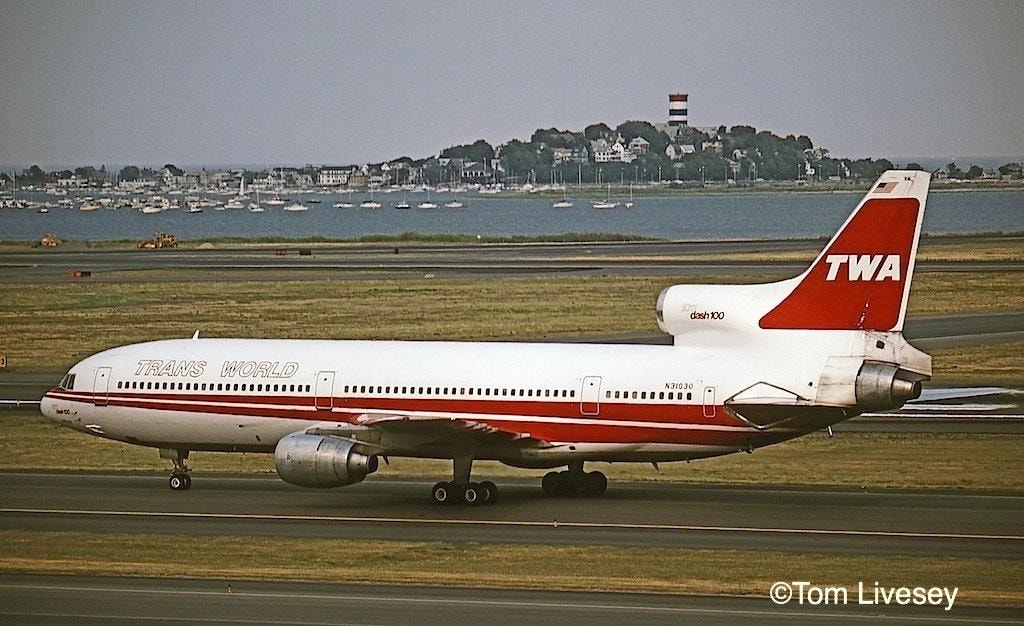
TWA's red and white livery, with its distinctive twin-stripe fuselage and bold red lettering, was one of the most recognisable in the sky. The later 'Getaway' scheme, introduced in the 1970s, added a sweeping red stripe that gave the aircraft a sense of motion even on the ground. The TWA Flight Center at JFK, with its swooping concrete curves, was the physical embodiment of the brand's ambition.
The End
What Went Wrong
TWA's decline was long and painful. Carl Icahn's hostile takeover in 1985 loaded the airline with debt and stripped it of assets — including its coveted Heathrow slots, sold to American Airlines. The 1996 explosion of Flight 800 off Long Island, killing all 230 on board, was a devastating blow. TWA filed for bankruptcy three times — in 1992, 1995, and 2001 — before American Airlines acquired it in January 2001 for just $742 million, a fraction of its former worth.
Deregulation
Deregulation's Role
Deregulation exposed TWA's structural weaknesses. Its route network was built for a regulated world of fixed fares and protected markets. When low-cost carriers entered its domestic routes and price competition intensified, TWA's high cost base — built up over decades of union agreements and legacy infrastructure — became a fatal liability. The freedom to compete also meant the freedom to fail, and TWA's management never found a sustainable model for the new environment.
Legacy
The Legacy
TWA's Saarinen terminal at JFK was saved from demolition and reopened in 2019 as a hotel — a fitting memorial to an airline that was always more than a transport provider. It was a cultural institution, a symbol of American ambition in the jet age, and a reminder that aviation was once genuinely exciting. The red and white livery lives on in photographs, models, and the memories of those who flew it during its golden years.
The Legacy Lives On
The TWA Hotel, JFK
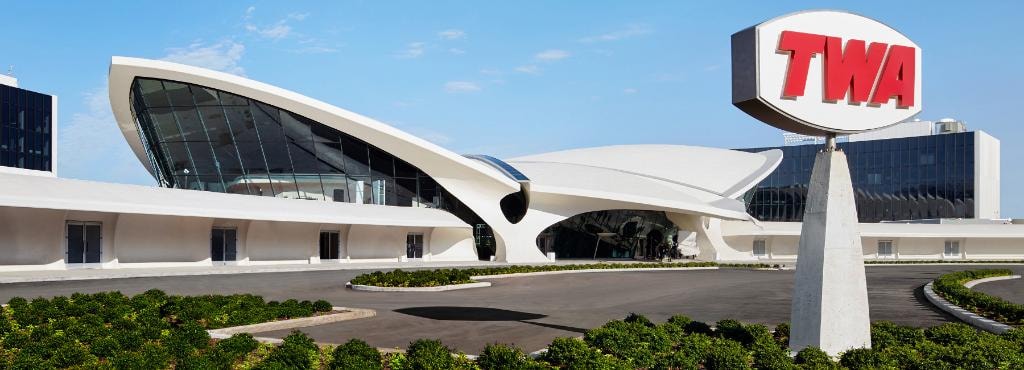
Eero Saarinen's soaring TWA Flight Center at John F. Kennedy Airport — completed in 1962 and widely regarded as the greatest building of the jet age — was preserved and reopened in 2019 as the TWA Hotel. Its sweeping concrete wings and futuristic interiors remain a monument to the optimism and glamour of the era TWA defined.
Frequently Asked Questions
Common Questions
Why did TWA go out of business?+
TWA's decline was accelerated by Howard Hughes's erratic ownership, which left the airline starved of capital and modern aircraft through the 1960s. After Hughes was forced out, TWA recovered briefly, but Carl Icahn's hostile takeover in 1985 proved fatal. Icahn loaded the airline with debt, sold its most profitable London routes to American Airlines for $445 million, and extracted hundreds of millions in personal profit while TWA deteriorated. It filed for bankruptcy twice — in 1992 and 1995 — before American Airlines absorbed it in 2001.
What happened to TWA after it closed?+
American Airlines acquired TWA in April 2001 for approximately $742 million, primarily to gain TWA's St. Louis hub and its slots at New York JFK and London Heathrow. Most TWA aircraft were repainted in American livery, the St. Louis hub was eventually downsized, and the TWA brand disappeared entirely. The TWA Hotel at JFK, housed in Eero Saarinen's iconic 1962 terminal, opened in 2019 as a luxury hotel preserving the building's extraordinary mid-century architecture.
Was TWA once a great airline?+
Absolutely. Under Howard Hughes in the 1940s and 1950s, TWA was a genuine innovator — it was the first airline to offer in-flight movies, pioneered pressurised cabin comfort, and competed directly with Pan Am on prestige transatlantic routes. Its Ambassador Class service was considered among the finest in the world. The Eero Saarinen terminal at JFK, opened in 1962, remains one of the most celebrated pieces of aviation architecture ever built.
Did Carl Icahn destroy TWA?+
Most aviation historians would say yes. Icahn acquired TWA in 1985 through a leveraged buyout, saddling the airline with enormous debt. He then sold TWA's highly profitable London Heathrow routes to American Airlines — routes that had taken decades to build — for short-term cash. When TWA filed for bankruptcy in 1992, Icahn personally profited while employees lost jobs and pension benefits. He is widely regarded as the single most destructive force in TWA's history.