

1926 – 1991
Eastern Air Lines
Once the largest airline in the world, Eastern was brought down not by the market alone, but by a bitter labour war that tore the company apart from within.
Years of service
Year it became world's largest airline
Year the fatal strike began
Heritage
The Golden Era
Eastern Air Lines was once the largest airline in the world by passenger numbers. Under the leadership of World War I ace Eddie Rickenbacker, it dominated the US East Coast and built a reputation for reliability and innovation. Its shuttle service between New York, Boston, and Washington — where you could simply turn up and board — was a revolutionary concept. The Great Silver Fleet, as Eastern called its aircraft, was a source of genuine pride.
Identity
The Iconic Livery
Eastern's livery evolved over the decades, but its most beloved scheme was the blue and white 'hockey stick' design of the 1960s and 1970s, featuring a bold blue cheatline sweeping up the fuselage. The Eastern falcon logo — a stylised bird in flight — was one of the most elegant in American aviation. Later, the airline adopted a more corporate blue and silver scheme, but it never quite matched the elegance of the earlier design.
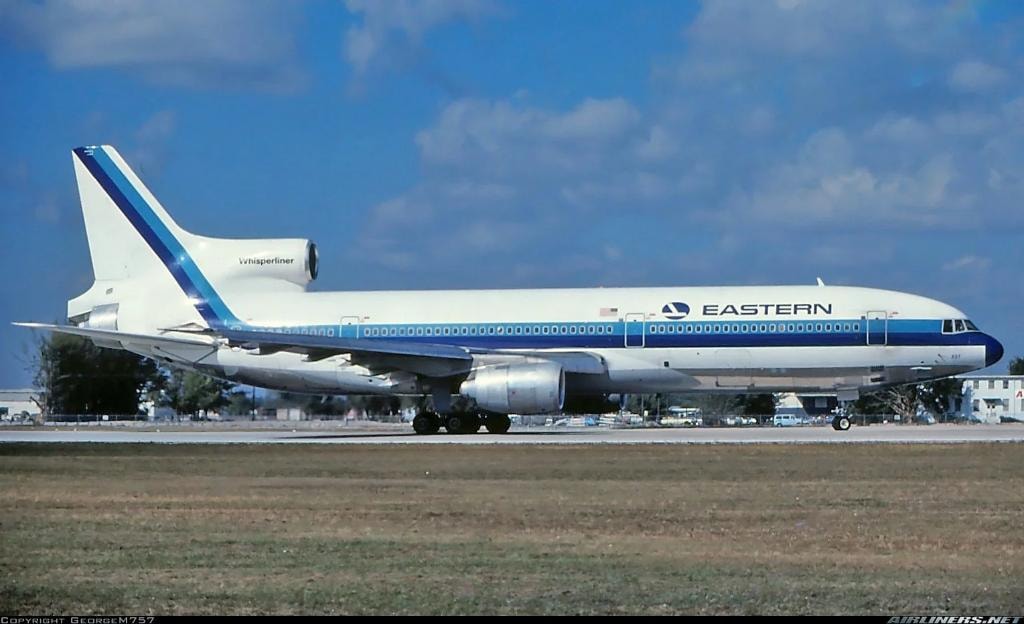
The End
What Went Wrong
Eastern's end was as dramatic as its history. Frank Lorenzo's Texas Air Corporation acquired Eastern in 1986, and his aggressive cost-cutting triggered a catastrophic strike by machinists in March 1989. Pilots and flight attendants honoured the picket lines, grounding most of the airline. Eastern limped on for two years, selling off routes and assets, before finally ceasing operations on 18 January 1991. The strike, and Lorenzo's handling of it, became a defining case study in how labour relations can destroy a great company.
Deregulation
Deregulation's Role
Deregulation created the conditions for Eastern's takeover by Lorenzo, whose strategy was to use deregulation's new freedoms to slash costs and undercut competitors. The problem was that Eastern's workforce, built under the regulated era's more cooperative labour relations, resisted the new model fiercely. Deregulation also opened Eastern's most profitable routes to low-cost competition, squeezing the margins it needed to service its debt. The combination proved fatal.
Legacy
The Legacy
Eastern's collapse was one of the most painful in aviation history — not because of a crash or a bombing, but because of a war within its own walls. The airline that had once been the pride of the East Coast died in bitterness and recrimination. Its shuttle routes were absorbed by US Air and Trump Shuttle. Its hubs were taken over by competitors. But the memory of Eastern — of the Great Silver Fleet and the no-reservation shuttle — endures among those who flew it in its prime.
Frequently Asked Questions
Common Questions
Why did Eastern Airlines fail?+
Eastern's collapse was triggered by a catastrophic labour dispute. In March 1989, the machinists' union went on strike, and pilots and flight attendants refused to cross picket lines. Owner Frank Lorenzo attempted the same union-breaking strategy he had used at Continental — but this time the workforce held firm. The strike grounded most of Eastern's fleet, destroyed passenger confidence, and burned through cash reserves. Eastern filed for bankruptcy in March 1989 and never recovered, ceasing operations in January 1991.
Who was Frank Lorenzo and what did he do to Eastern?+
Frank Lorenzo was a financier who built Texas Air Corporation into the largest US airline group of the 1980s by acquiring Continental, Eastern, and People Express. He was notorious for using bankruptcy as a tool to break union contracts — a strategy that worked at Continental in 1983 but backfired spectacularly at Eastern. His confrontational management style united Eastern's three unions against him, and the resulting strike destroyed the airline. Lorenzo was eventually barred by a bankruptcy judge from running an airline again.
What routes did Eastern Airlines fly?+
Eastern was primarily a US domestic carrier with a strong presence on the East Coast corridor between Boston, New York, Washington, Miami, and Atlanta. It dominated the lucrative Air Shuttle service between New York LaGuardia, Boston Logan, and Washington National — a no-reservation, turn-up-and-fly service launched in 1961 that became a model for short-haul aviation. Eastern also operated to the Caribbean, Latin America, and Canada.
Could Eastern Airlines have survived?+
Eastern was actually profitable in the early 1980s under Frank Borman's leadership, but Borman extracted wage concessions from unions in exchange for equity stakes — a deal that created lasting bitterness. When Lorenzo acquired the airline in 1986, the workforce was already hostile. A different owner with a less confrontational approach might have navigated deregulation successfully; Eastern's route network and brand were genuinely strong. The labour war, not deregulation itself, was the proximate cause of its death.